Childhood is meant to be loud, filled with laughter, scraped knees, going out to play, and bedtime stories. Immigration and Customs Enforcement (ICE) actions in Maywood are creating fear among families and affecting students’ ability to learn and feel safe. In interviews with MACES students and staff, many described fear, family separation, and a growing mistrust of government power as Immigration and Customs Enforcement (ICE) actions continue to affect immigrant communities.
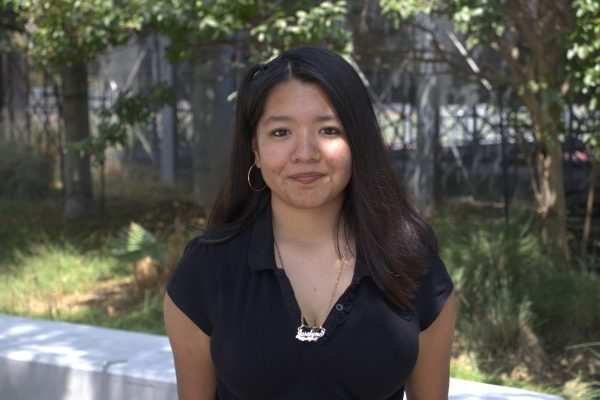
Several students said they believe ICE’s current actions have caused deep emotional harm, particularly to families with undocumented members. “I think it’s really sad,” said Camila Del Cid. “A lot of families are getting separated, and it feels like ICE agents are abusing their power,”
Others echoed similar concerns, describing the enforcement as depressing and unjust. The actions feel like “a form of control,” Samantha Castro adding that the targeting of families and children suggests motives beyond public safety. “You can’t say you’re only going after criminals when children are being taken,” Samantha Castro said.
Students shared how ICE has affected their families’ daily lives, forcing relatives to stay indoors out of fear. “Some of my family members are scared to go out just to buy groceries,” Chris Perdomo explained. “We have to help them with basic needs because they’re afraid of being taken,” Camila Del Cid said. A student explained that, “Both of my parents don’t go out much anymore like they used to due to the immigration. And for me, seeing them at home all day it’s messed up,” Leandro Barrales said.
Concerns about racial profiling were also a major theme. Students said allowing ICE to racially profile people based on appearance, names, or neighborhoods is discriminatory and harmful. “It’s inherently racist,” Samantha Castro said. “Just because something is legal doesn’t make it moral,” According to the Media library an interview with ICE Deputy Executive Associate Director stated “Anyone who crosses unlawfully is subject to those laws, regardless of family status,”
The interviews also revealed a shift in how students view government power. Several students said that witnessing ICE raids has made them more politically aware and vocal. “I wasn’t really into politics before,” said Chris Perdomo and Camila Del Cid. “But now I’m worried. If the government can hurt people like this, how do we know they’ll protect us?” said Chris Perdomo.
Students emphasized that immigrant communities play a vital role in the economy and society. They pointed to empty swap meets, businesses, and workplaces as signs of broader consequences. According to the UC Irvine working paper published in January 21, T. William Lester states that Orange county has lost around $59 million in economic output since immigration intensified in the past eight weeks. “Immigrants buy things, sell things, and keep communities alive,” Camila Del Cid said. “If they’re too scared to go out, everyone is affected,”
When asked whether ICE makes communities safer, most students said it does the opposite. They described increased fear, tension, and even violence. “When someone’s in fear, their fight or flight kicks in, and they act out of fear,” Camila Del Cid said. “That doesn’t make anyone safer.” Another student added, “It really makes communities less safe, because when people get taken and they’re assaulted without any real reason to, they’re unarmed, and yet they’re still being shot at. And when people try to defend themselves or defend others, they’re being hit and involved in the violence that’s being instilled,“ Chris Perdomo said.
Students also stressed the importance of understanding immigrants as people seeking better lives, not threats. “It’s important that people realize that immigrants don’t come to another country for any bad reason whatsoever. Immigration is filled by either a need for something better,” Samantha Castro said. “Most immigrants, they don’t intend to harm. And it’s really that small percent that people try to pin the entire immigrant community on, like drug dealers or gangs,”
Students also expressed concern for children affected by immigration policies, saying fear can disrupt education and emotional well-being. “When students are scared to go to school, they can’t learn, and this affects how our new generations will develop,” Leandro Barrales said.
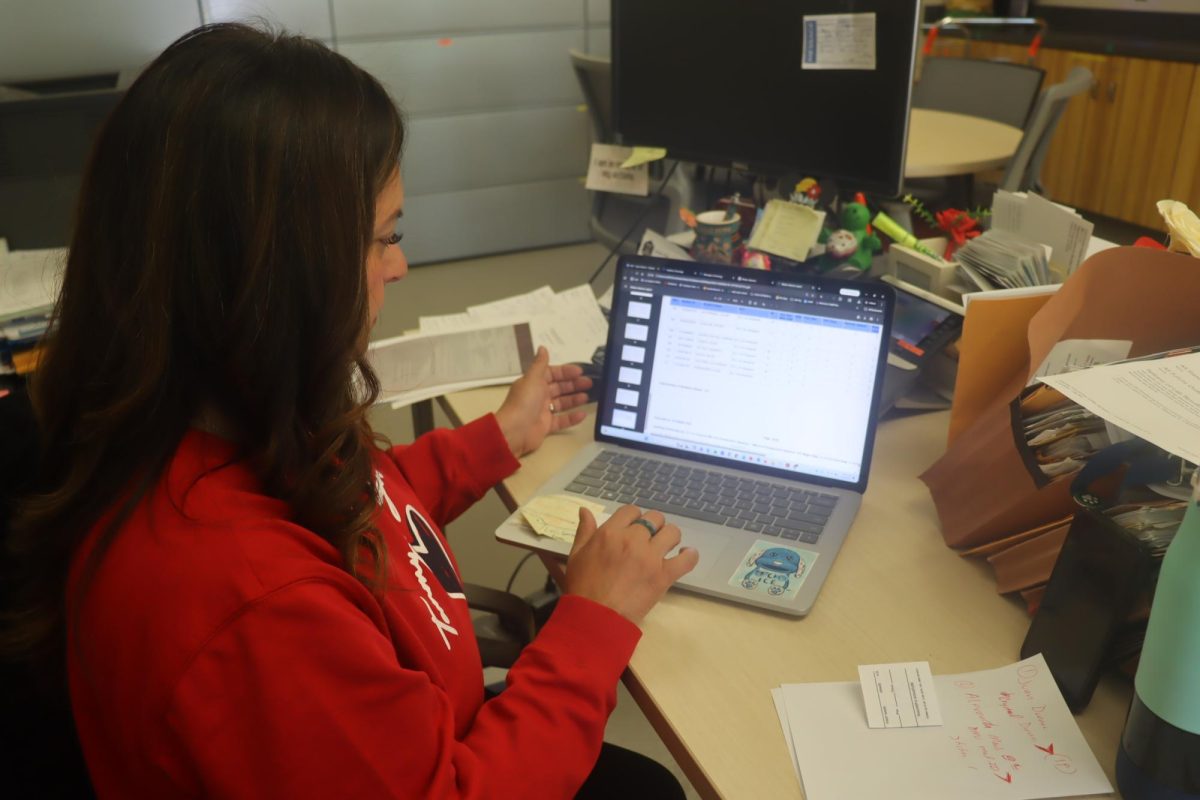
School staff say they witness these effects firsthand. A MACES administrator, Mr. Cueva said immigration enforcement actions that create fear are “deeply concerning” because of how they affect students’ emotional well-being and ability to learn. “When students walk onto campus carrying worries about their families, it affects their focus, sense of belonging, and emotional stability,” said Mr. Cueva. “No child should have to carry that uncertainty while trying to learn,”
Mr. Cueva emphasized that the school prioritizes safety and privacy for all students. According to him, MACES follows district policy by not collecting or sharing information about students’ immigration status and by strictly safeguarding student records. Any request from outside agencies requesting access to campus or information is referred to the district office and handled through established legal protocols. “No access is granted without proper authorization,” Mr. Cueva said.
Beyond policy, Mr. Cueva highlighted the school’s support systems designed to help students manage stress and fear. Ms. Tapia, the school’s PSA, works closely with families to connect them with resources. Ms. Torres, the PSW, provides social-emotional support to students experiencing anxiety, while Mr. Ramos, the School Climate Advocate, oversees the Calm Room, where students can regulate and reset during the school day. Ms. Picasso, the Community Representative, builds relationships with families and connects them to community services.
“Together, this team ensures that when fear or uncertainty arises, students are met with empathy, practical support, and trusted adults,” Mr. Cueva said. There are a good amount of students that use the calm room to calm down, get away from a loud environment, or to de-stress. “Our families need to know their children belong here, their rights are protected, and they are supported,”
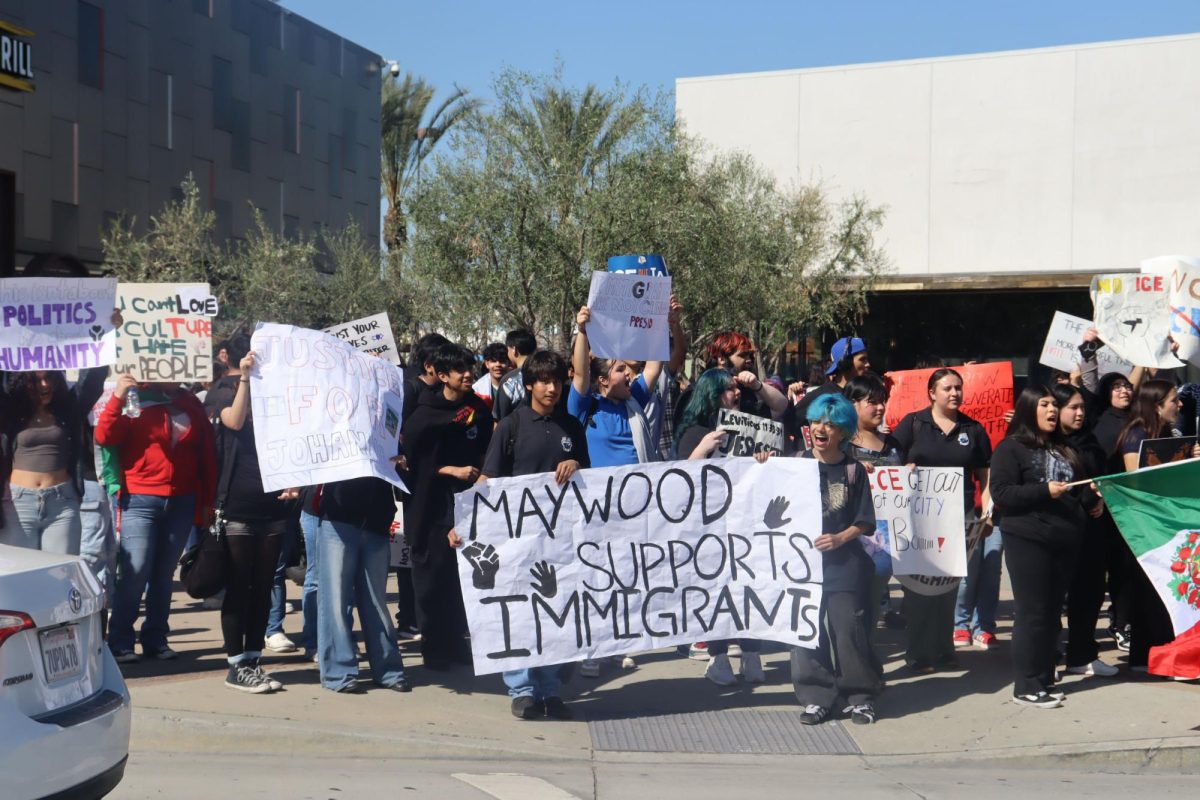
As ICE enforcement continues, some students and staff say that their voices reflect what they see: how immigration policies can affect families, children, and entire communities—often in ways that last far beyond the raids themselves. Students in LAUSD from the southeast district came together on February 13, 2026 for a walkout in protest against ICE being inside the community. When asked to explain their decision to walk out, the two students pointed to similar factors describing a shared set of concerns that led them to take action. Lola, a demonstrator from Maywood Academy, said, “We walked out today for a reason. We walked out for our families, our friends, our community, for everyone who has been victimized by ICE. We do it for the people currently in inhumane detention centers, and for the people killed by ICE, like, Alex Padilla, Steve Porter Jr., and for one of our girls who was taken from ICE, Joanna. I have it on my back, “For Joanna,” she was sadly detained by ICE last year,”
Argeniz Orozco, a senior from MACES said, “The way that ICE is treating people who are immigrating in America, or even people who aren’t even immigrants, just people who live here that are documented and everything, and they still mistreat them, and it’s just all wrong to me, I think it’s inhumane the way they’re treating some of the people that they’re deporting,” When asked about how he felt that the majority of the southeast district walked out he found it heartwarming that the community is coming together and uniting to show their support of Immigrants.
-xxx-