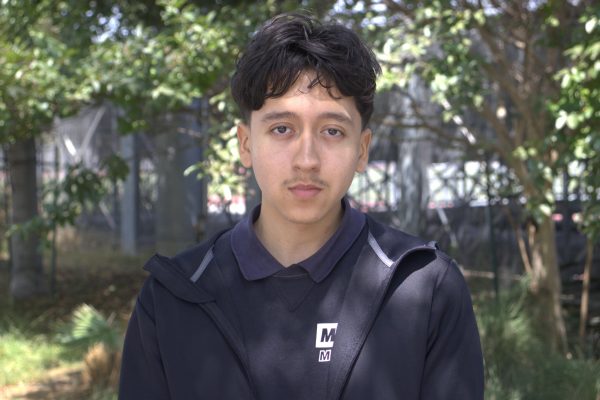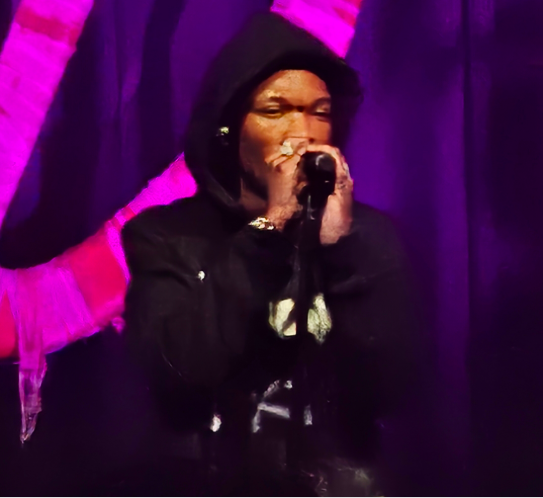
As of late, David Anthony Burke, better known by his stage name ‘d4vd’, a well-acclaimed alternative/indie pop artist, has faced a wave of backlash online over controversies that have left fans in shock. Burke was allegedly responsible for the murder of fourteen-year-old Celeste Rivas Hernandez after her decomposing body was discovered in the back of a Tesla believed to be registered under his name, according to the Los Angeles County District Attorney’s Office and Los Angeles Police Department. Prosecutors allege Burke committed this horrifying action in an effort to save his musical career after Hernandez threatened to expose their relationship due to her being underaged, thus potentially ruining his reputation with the public.
While many individuals have expressed that Burke should be held accountable for his alleged crimes, the situation has also sparked debate over his artistic career. Should we separate the art from the artist?
Some believe that Burke’s artistry shouldn’t be separated from his actions and that music shouldn’t be streamed, as he receives profits and is viewed as morally wrong. “In a situation like this when the artist is facing charges of murder, relations with someone under 18, and owning explicit material including minors, I don’t think that term could be applied as I believe d4vd is definitely guilty and I hope to soon see him prosecuted,” Angel Espinoza, a senior, said.
Despite this, there are also many who believe his art should be separated from his actions. “To separate the art from the artist is to recognize that once art is released, it no longer belongs solely to its creator,” said Tomi Peh of the Raffles Press, a student-journalist site from Singapore. However, this mindset can be flawed as his music seemingly contains references to the murder of Hernandez long before he was charged. In his breakout hit, Romantic Homicide, there are lyrics reading, “In the back of my mind, I killed you…And I didn’t even regret it,” according to Genius, a lyrics database. Furthermore, the music video depicts the body of a young girl being dragged into the trunk of a vehicle, which mirrors the real-life tragedy. For many listeners, the similarities between Burke’s music and the allegations against him make it more difficult to separate the art from the artist.
At the same time however, separating the art from the artist is not always easy for many. Music is often considered a coping mechanism for personal problems and a way to escape reality. On the contrary, Burke’s music mirrors real-life in a negative and disturbing manner which defeats the whole purpose of using music to escape the harsh reality. But listeners face a difficult question: whether they can continue supporting someone whose actions they heavily disagree with. Some believe the answer is yes, while others believe no for moral reasons.
When it comes to discussions like these, listeners often cite other musical artists that have a controversial reputation with the public but still receive praise from their fanbase such as Kanye West. West has made the headlines the last few years over his controversial political opinions and antisemetic remarks. However, many believe Burke’s actions are incomparable due to the severity of the crimes. “For things like controversial statements, I think the art could be separated. For instance, Kanye West has said some very controversial things, but it’s hard to deny he’s one of the best artists of all time,” Espinoza added. Even though there have been artists in the past who have said some controversial comments, the music can still be preserved if the action is at least reversible or the evidence of such crimes appears to look bleak. For Burke, his actions are immoral and irreversible. The evidence matches up, and his music even references the crime, thus adding more fuel to the flame.
On the contrary, some maintain that his music should still be separated from his actions. Anthony Sanchez, a junior, said he believes it is worth separating an artist’s work from their personal actions as the two are unrelated. Sanchez adds on by saying, “You look at other artists that were in similar situations like Michael Jackson, who was accused of many things but people still love his music.” Jackson faced allegations of child abuse, though he was later acquitted in court.
Ultimately, the debate over separating art from the artist is really dependent on the context. While it may be a difficult choice, it’s important to reflect back on Burke’s case as a reminder to our true morals and beliefs. A mindset that doesn’t feed monsters but rather opposes them. While listeners can still appreciate music while recognizing an artist’s mistakes, sometimes those mistakes can be too much for people in continuing their support. Especially if the action is engraved within the music itself just like in Burke’s case. As many would argue, liking and appreciating someone’s artistry should never matter more than having strong moral values and critical thinking.