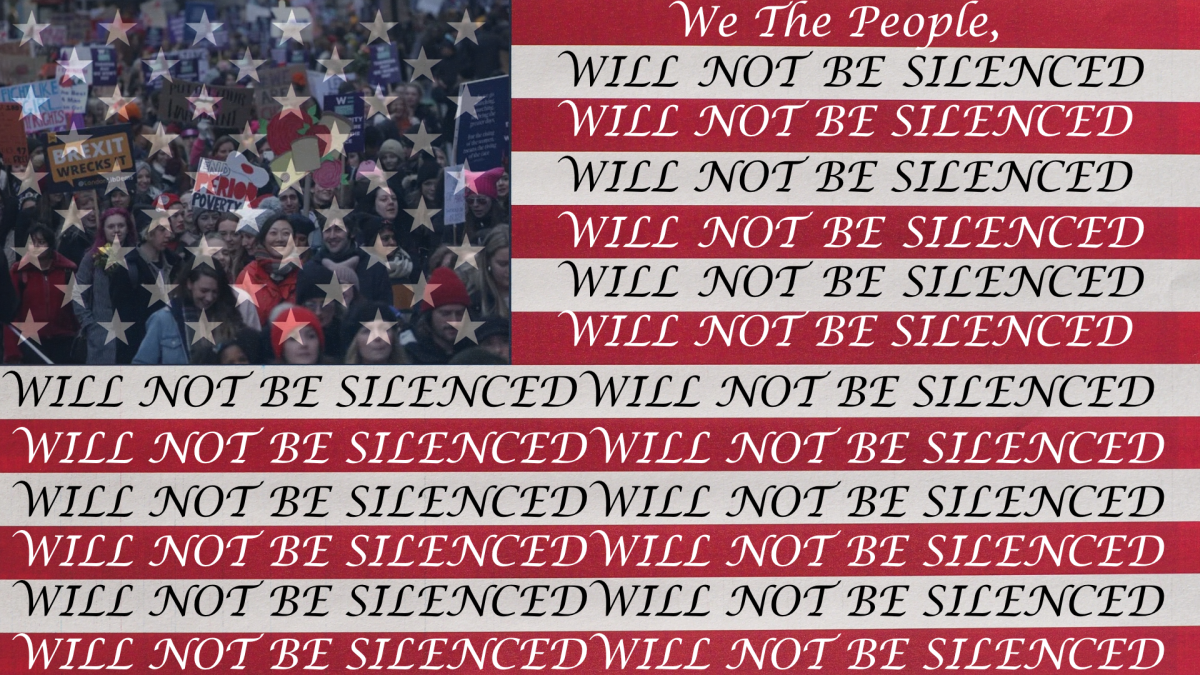
Students have come together to collectively rise in order to express their voice with student-led protests. MACES students are leaving their classes to walk down the streets of Los Angeles, hoping that people will hear their pleading voices to stop the ongoing aggressive acts against immigrants.
However, it’s an open secret that some students will enjoy their three day weekend earlier than the rest when they fade away from the group. Rather than seeking a break from their work, students are departing the classroom to demand policy change, viewing their advocacy as a necessary investment in a more equitable and just future.
Students are protesting for their parents, grandparents, uncles, aunts, and their friends’ families to express their fury. A large demographic of people are fearful to leave their homes because their fear of being taken away at any moment lingers in their minds. However, students have reached their breaking point, where their fear can no longer paralyze them but instead mobilizes them to stand up. By stepping out into the streets, they are transforming their fear of survival into a demand for justice, proving that when the threat of violence becomes constant, silence is no longer a safer option. MACES students are progressing to use their voices for those people they know that don’t have papers, or even if they do, it doesn’t matter to ICE since they are now able to racially profile people. The topic of ICE has simply become more and more talked about among students since this affects them. This shows that the students that are advocating and spreading awareness are the ones that are aiming for a better future for the community. By organizing on February 13, they have signaled that they are no longer willing to be silent bystanders while their families are targeted by violent enforcement policies.
However, a different motive exists for a portion of the crowd. While claiming to join the cause, some students use the walkout as an excuse to escape the school week, slipping away from the group to find food or head home. While some were carrying hand-painted signs and chanting for reform, others were already eyeing their favorite fast food to escape to. These students mimic and destroy the purpose of a protest. When the public perceives a protest as an excuse for truancy, it allows critics to dismiss the entire cause as immature or insincere. Additionally, this disengages students from engaging in activism as they watch their fellow classmates treat the walkout as a way to leave school earlier than the rest. This phony participation “mimics” the aesthetic of a movement while diverting the energy and focus necessary to achieve substantive political goals.
Such behavior creates a fine line between the activists, driven by fury and a demand for change. On the other side are the opportunists, following the crowd only until it becomes convenient to peel away. When students take advantage of a serious humanitarian crisis to snag a few extra hours of relaxation, they dilute the power of the message their peers are trying to send. The true measure of the day won’t be found in the number of students who leave school, but in how many are still standing in the streets of LA when the sun goes down.